Telecom and HFC networks are built from parts that all look similar on a datasheet and behave very differently after ten years in a hut. The three that matter most in our range are the amplification stage, the routing parts around it, and the filters that keep the channels apart.
What we supply for 1550 nm transport and HFC
| Function | Product | Published figures |
|---|---|---|
| Amplification | C-band EDFA modules in CW, pulsed and miniaturised form | Output +20 to +40 dBm; typical gain 30 dB; noise figure ≤5 dB; input/output isolation ≥45 dB |
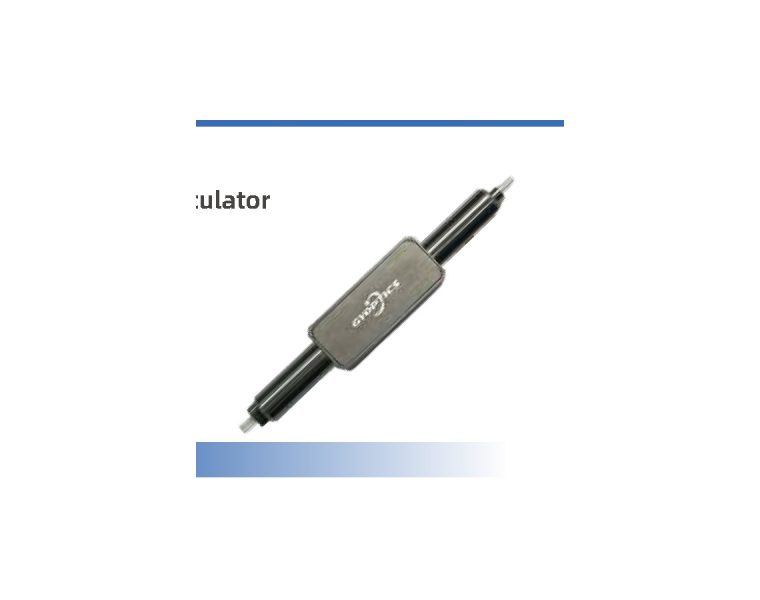
| Routing and isolation | PM circulators and isolators; polarization-independent isolators and circulators for high power | 1550 nm PM circulator: isolation 45 dB at 23 °C, 35 dB minimum over −40 to +60 °C, return loss 70 dB, PER 20 dB |
| Filtering | PM filter WDM (1540/1563 nm), PM bandpass filters, fibre Bragg gratings at special wavelengths | PM isolator-filter-WDM: insertion loss 0.8 dB, extinction ratio 20 dB |
| Monitoring and balancing | PM tap couplers (2 and 4 channel), MEMS variable attenuators, motorised delay lines | Tap ratios and attenuation range quoted per configuration |
What to send
Channel plan and wavelength range, output power per span, whether the link is polarization-maintaining or standard single-mode, the package you can fit (module or 19-inch card), and the operating temperature range. Those five answers decide whether an OEM module fits or whether the requirement needs a custom build — and we will tell you which one it is rather than send a catalogue.
Common questions
Do you have polarization-independent versions?
Yes. Where a link is not polarization-maintaining, the isolators and circulators are specified as polarization-independent parts; for coherent or PM links we supply the PM versions, which hold 35 dB isolation across −40 to +60 °C rather than only at room temperature.
Can the EDFA be branded and packaged for our line card?
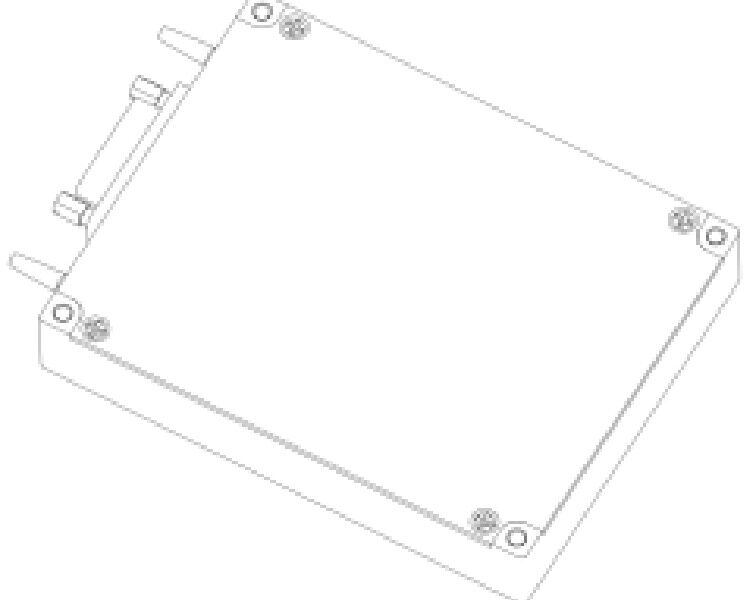
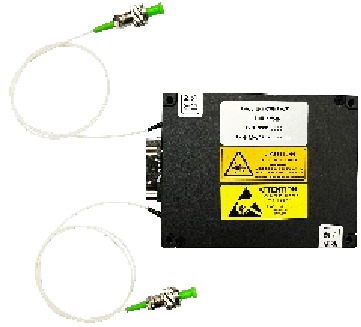
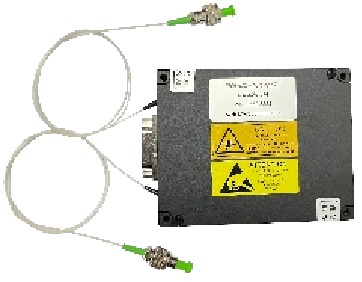
OEM form with your branding is possible, and the compact module is 90 × 70 × 15 mm with FC/APC pigtails. The final package, connector and marking are confirmed with the factory per order, so we quote them rather than assume them.
Which parts do you not make?
Transponders, ROADM line cards and the DSP behind them. We supply the passive and amplification parts that sit around those cards, which is why a question about the optical layer usually lands with us rather than with a module vendor.