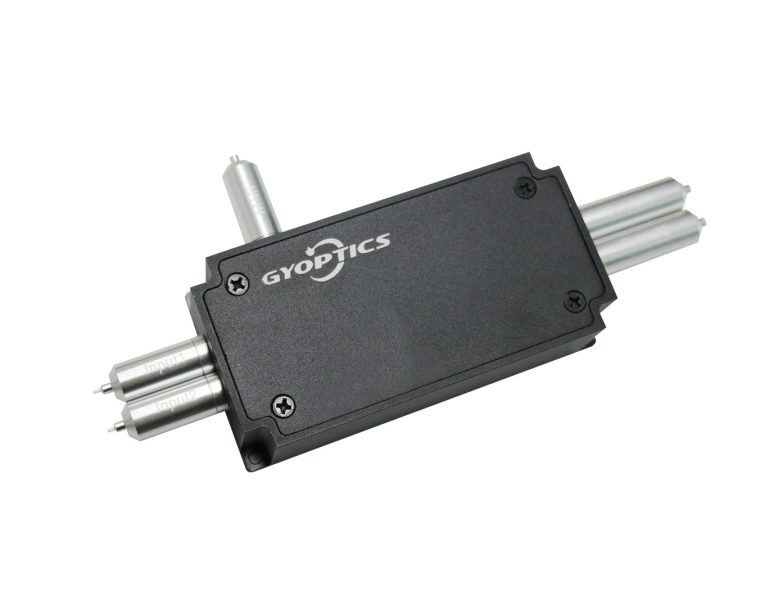
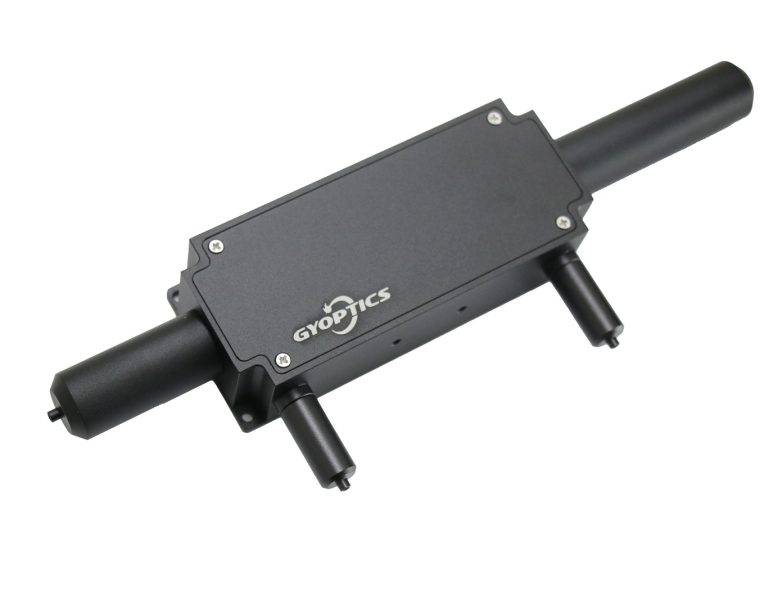
Every polarization-maintaining chain has the same weak point: the parts carrying the light, not the laser launching it. A PM isolator, circulator or tap has to hold the slow axis through every splice, keyed connector and port, and the extinction ratio measured at the detector is the sum of those joints, not the figure printed on one datasheet.
What to compare before specifying
- Extinction ratio (PER) — 20 dB minimum on our PM combiners, circulators and attenuators, measured at the component. Expect the figure at the detector to be lower.
- Isolation and return loss are different numbers — our 1550 nm PM isolator is published at 0.7–0.8 dB maximum insertion loss with 32 dB and 50 dB typical peak isolation for the single and dual stage versions.
- Axis handling — a few degrees of rotation at one joint costs several dB of PER, so keyed mating and pair testing matter more than the last 0.1 dB of insertion loss.
| Device | Wavelength | Key published figures | Note |
|---|---|---|---|
| PM isolator | 1550 nm | IL ≤0.7 / 0.8 dB, isolation typ. 32 / 50 dB | Single or dual stage, λc ± 20 nm |
| PM circulator | 460 nm | IL ≤1.8 dB, isolation ≥20 dB, crosstalk ≥45 dB | Visible-wavelength routing |
| PM circulator | 1064 nm, 100 W | IL ≤0.7 dB, isolation ≥25 dB | Forward-tap version at 50 W |
| PM filter isolator | 1064 nm, 30 W | Isolation ≥28 dB, RL ≥50 dB, pass band 5 / 8 nm | 2- and 4-channel compact |
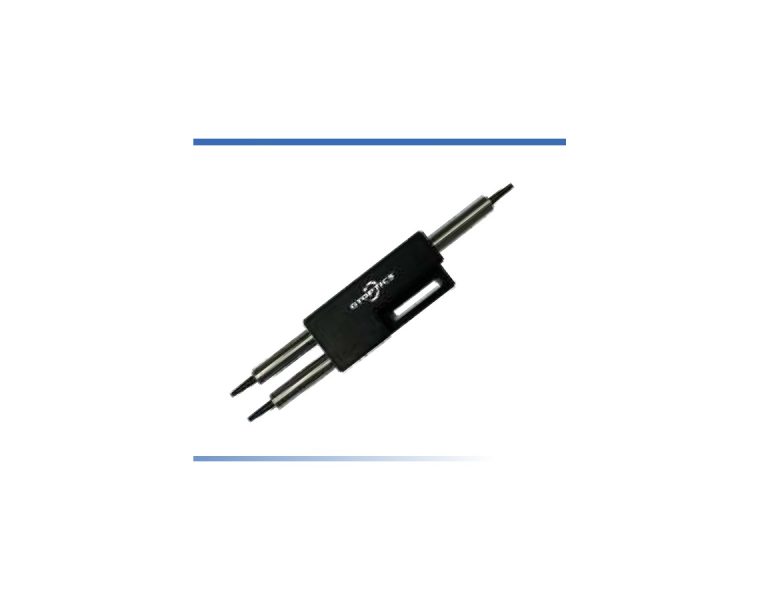
| PM variable attenuator | 1030–2000 nm | 0.6–60 dB, PER ≥20 dB, PDL ≤0.1 dB | Manual |
Common questions
Does extinction ratio add up across a chain?
Roughly yes. Each joint contributes its own error, so a PM isolator and a PM circulator in the same build should be aligned and tested as a pair rather than separately — the errors do not cancel out.
Can a PM circulator replace a PM isolator?
It can carry the isolation function, but the two are not interchangeable. A circulator has three paths that each have to hold the slow axis, and its published PER describes the component, not the light reaching the detector.
Which wavelengths are available?
460, 635, 780–850, 1030/1064, 1310 and 1550 nm across the range; the PM attenuator covers 1030–2000 nm. Visible and 2 µm parts are built to order.